Just sellise pealkirja all avaldas Ungari Rahvusassamblee väliskomisjoni esimees Zsolt Németh (pildil) oma arvamuse Ungari ajalehes "Magyar Hírlap". Toon selle siinkohal ära tõlgituna inglise keelde, sest üheks ajendiks tema loole ja ka avalikele pressiavaldustele sai siinse blogipidaja arvamus Saranski soome-ugri festivali poliitilise osa kohta.
Mul oli hea meel täna lugeda ka endise hea kolleegi Toomas Alatalu arvamust SL Õhtulehest. Olgugi, et mõnes küsimuses ma Toomasega ei nõustu, on just sisuline arutelu ja diskussioon see, mis tihti on puudu meie välispoliitilises diskursuses. Täna tuli samal teemal rääkida ka Moscow Times'i ajakirjanikuga, kes samuti võtab teema üles sellel nädalal.
Siin aga siis Z. Nemethi arvamus:
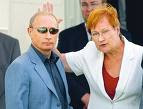
"Let us have a look at the bare facts. On Thursday, 19 July 2007, Russia’s President, Vladimir Putin, the President of Finland, Tarja Halonen, and the Prime Minister of Hungary, Ferenc Gyurcsány will meet in the Mordovian Saransk. The meeting will be held as part of the Finno-Ugric peoples’ festival and is considered a Finno-Ugric summit. However, the president of the third largest Finno-Ugric nation, the president of the independent, European Union- and NATO-member Estonia has not been invited to the meeting. It is common knowledge that there has been some fierce debate between Estonia and Russia in recent times and relations are not very smooth. The Chairman of Parliamentary Commission on European Affairs, Marko Mihkelson has recently used very sharp words in his criticism of this “negligence”, making it certain that international publicity will closely monitor the Finno-Ugric summit held without the participation of Estonia.
Estonian isolation
The antecedents that have led to the summit are certainly worth a closer look. Initially a Finland-Russia summit was expanded to make a Finno-Ugric meeting but with the additional participation of one country only: Hungary. And this is where we arrive at our first dilemma: when Russia organises a Finno-Ugric summit with the participation of Finland and Hungary and without Estonia, does then Russia really wish to strengthen the cultural heritage of the Finno-Ugric peoples, or rather use diplomacy to isolate and humiliate Estonia, and teach the small country good manners? Something tells me the objective is this latter. Perhaps I am not the only one thinking this and there must also be other people in the Hungarian foreign ministry that have come to see through this not so complicated strategy. At least this was suggested by one of the state secretaries of the Foreign Ministry when, in his reaction to a question before the National Assembly, he launched out into explanations and “assured” everyone that the ministry would be seeking consultations before the meeting with Tallinn to prevent any uncalled for speculations. Our Estonian relatives and friends, our EU- and NATO-allies will certainly be loud in their praises when seeing this “brave” gesture and display of unconditional solidarity.
But the situation is not that funny. Not funny because Hungary is once more being used. It voluntarily becomes a means in a strategy whose aim is to divide the European Union and NATO. Moscow nowadays believes that a weak EU and NATO serves her strategic purposes better, therefore Moscow will exalt some one day while precipitate others the next with the underlying aim of dividing; but before we get angry with Russia, let us make one thing clear: Moscow could not play such games that easily if it did not have partners. However, Moscow does have partners. Think about Gerhard Schröder, who is the anti-US, pro-Russia leader of the largest economic power of Europe one week, then one of the leaders of Gazprom the next. And there is another government that somehow always becomes part of this see-saw: and that is the government of Ferenc Gyurcsány.
Obvious trend
Let us see the list. Russia wishes to increase her influence most by investments in the energy sector. For this reason it is in her very interest to frustrate projects that are based on security-policy considerations and could facilitate the construction of alternative energy supply routes in the vulnerable Central and Eastern European region. And in a situation such as this, who was the prime minister that called the European Union’s project a dream and opted for Russia’s Blue Stream? It was Ferenc Gyurcsány. Five sovereign NATO-members, the US, Great Britain, Denmark, Poland, and the Czech Republic decide to build a missile defence system to fill an existing vacuum in security policies and offer it up for NATO. Although military experts undeniably demonstrate that the system does not threaten Russia, Moscow still starts objecting. And who was the Prime Minister that questioned the need for such a system in the Moscow News? It was Ferenc Gyurcsány. A Russian dissident, who also happened to be a British citizen, was murdered in London. The British investigation is pointing to a Russian agent. Moscow is reluctant to satisfy the demand for extradition. Great Britain then wanted a common EU-declaration on the grounds that what had happened in London, can also happen anywhere else. Whose prime minister’s foreign administration was unable to give a response to the EU- and NATO-ally Great Britain for weeks? It was Ferenc Gyurcsány’s. The EU- and NATO member-state Estonia removed a statue from the main square of its capital and erected it in a cemetery. In response, Russia broke into the computer system of the Estonian government, stopped railway oil deliveries, put the country’s Moscow Embassy under siege, and incited people to paint the city of Tallinn red. Which prime minister’s foreign minister was talking about the responsibility of Estonians under the given circumstances? It was Ferenc Gyurcsány’s. The Ahtisaari plan offering a solution to the Kosovo crisis seems to be hanging in the air because of Russia’s veto in the UN. Who was the rime minister that had nothing relevant to say about the issue? It was Ferenc Gyurcsány. It is an underlying principle in NATO that the security risk posed by Soviet secret service inherited from the past must be constantly reduced in the secret services of Central and Eastern European member states. Who is the prime minister that called back an “old fighter” who learned the profession at the Moscow Dzerzhinsky Academy between 1982 and 1987 from his pension to head the Hungarian Secret Services? It was Ferenc Gyurcsány.
Voluntarily and singing
Now Hungary’s participation in the summit fits nicely into this trend. Yes, Hungary takes part in the isolation and humiliation of Estonia voluntarily and signing; and by doing so it helps reduce the cohesion within international organisations by the delusion of an EU and NATO member-state. This reduces the effectiveness of these international organisations, namely the EU and NATO whose operability and functionality are the preconditions for balanced international relations in our times, what is more, they are practically the token of Hungarian citizens’ security and reasonable living standards. Let there be no mistake about it! A commendable Russian-Hungarian summit is always well-received because maintaining good relations with Russia is in our very interest. Just as there would be nothing wrong with a consultation between the leaders of Hungary, Finland, and Russia. The problem is when these three countries bring about a Finno-Ugric summit without the inclusion of the Estonian leader as this act goes beyond the building of relations and the protection of the identities and interests of Finno-Ugric peoples.
Let us not have illusions: with his latest move, Ferenc Gyurcsány further deepens the process that overshadows Hungary’s Euro-Atlantic image. And when a pro-government daily will once again talk about “Fidesz’s international campaign to discredit their political opponent” in its leading cover page article, it may be worthwhile to inform the journalist in good time of what put Ferenc Gyucsány in this situation. Was it “naughty” Fidesz? No. It was Ferenc Gyurcsány’s narrow-minded vanity coupled with the waning immunity of the foreign affairs administration crippled by the Prime Minister in the better-case scenario. In the worse-case scenario, however, the trend is not mere coincidence, but part of a well constructed scheme. But if that is the case, the trouble is much greater than we would think."